
Stay Open & Safe All Winter Long
Leaf removal in Springfield for lawns buried under seasonal accumulation before dormancy begins
Living Green Lawn Care, LLC provides leaf removal in Springfield for homeowners dealing with turf grass smothered under dense leaf cover as fall progresses. Thick leaf accumulation blocks sunlight and traps moisture against grass blades, creating the low-oxygen, high-humidity conditions that invite fungal activity before the first frost. What you'll notice after removal is that the lawn surface is fully visible again—no matted layers, no dark wet patches where leaves had been sitting for weeks.
Springfield's combination of oak, maple, and sweet gum trees produces a heavy, staggered leaf drop that often continues into late November—meaning a single cleanup pass at the start of fall rarely covers the full season. Leaves from these species mat down quickly, especially after rain, and the compressed layer becomes dense enough to suffocate turf crowns if left in place past the point of dormancy. Leaf removal at the right intervals allows grass roots to harden off properly heading into winter, rather than going dormant under a layer of decomposing organic material.
Schedule a property walkthrough to evaluate leaf volume, turf condition, and the number of service visits your yard will need through the end of the season.
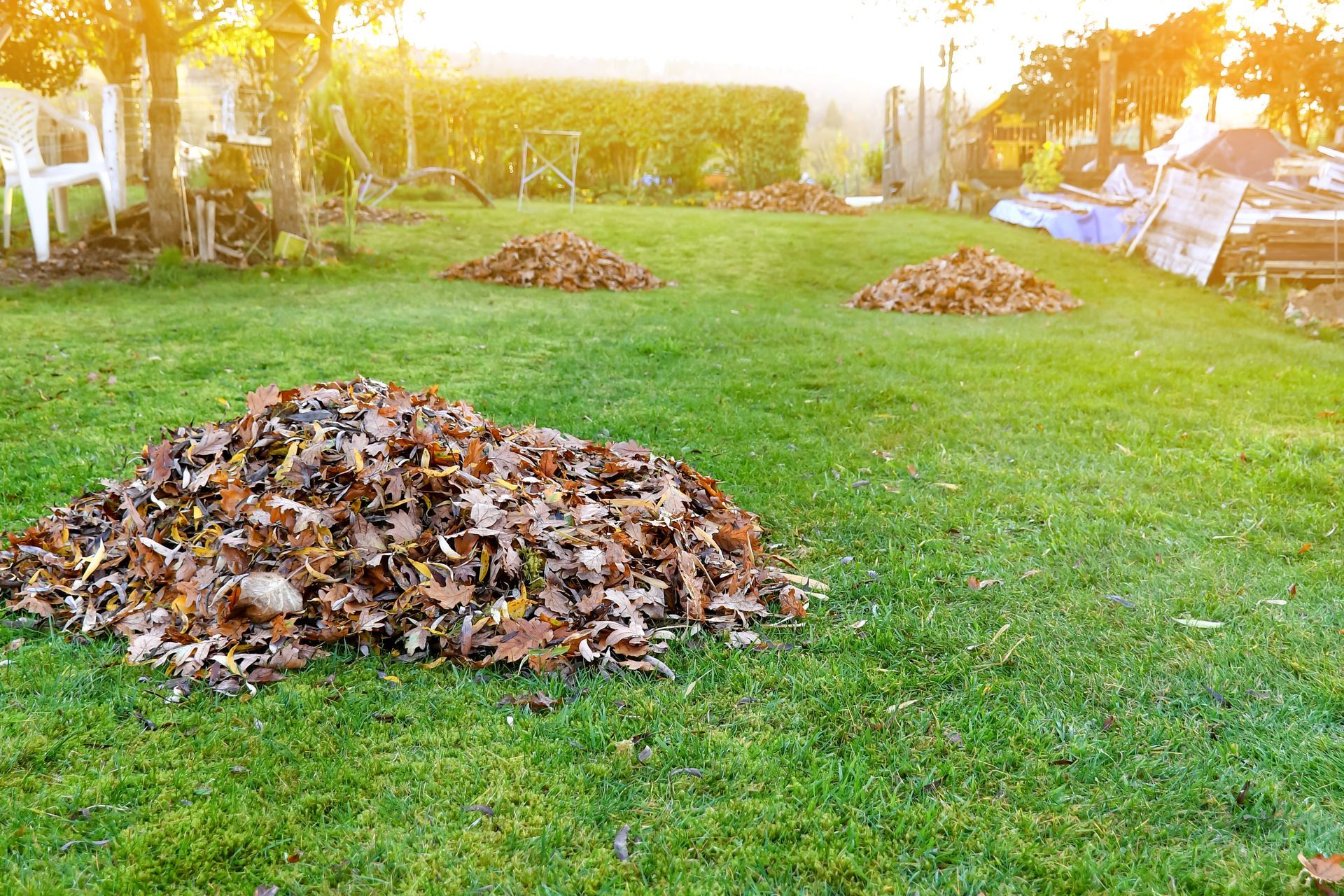
What Leaf Removal Actually Accomplishes for Turf
Leaf removal involves collecting, consolidating, and hauling away accumulated leaf debris from lawn surfaces, planting beds, and hardscape edges. In practice, the process typically requires blowers to move leaves from borders and tight spaces, followed by collection equipment to gather and load material for disposal. The decision between mulching leaves in place versus full removal depends on leaf volume—a light, uniform layer can be mulched back into the lawn, but once coverage exceeds roughly thirty percent of the grass surface, full removal produces better turf outcomes heading into winter.
After service is complete, you'll see clean turf lines across the lawn, open bed edges, and cleared hardscape surfaces. Grass that had been flattened under wet leaves typically stands upright again within a day or two as it responds to renewed airflow and light. Areas that appeared yellowed or matted often show more normal color once the smothering layer is gone and conditions normalize.
It's worth noting that leaf removal service addresses surface accumulation but does not include deep thatch removal or aeration—those are separate processes suited to spring or early fall scheduling. Beds with groundcover or low perennials may require hand-clearing in sections where mechanical blowers would damage plants, which affects how the work is staged across the property.
Common Questions About Leaf Removal
Below are answers to questions that Springfield property owners frequently ask when planning leaf removal service through the fall season.
What happens to the leaves after they're collected?
Collected leaf material is typically loaded and hauled off-site for composting or disposal, leaving no piles at the property edge or along the curb unless a specific curbside arrangement has been discussed in advance.
How many service visits does a typical Springfield yard need?
Because Springfield's tree canopy drops leaves in waves across October and November rather than all at once, most properties benefit from two to three scheduled visits spaced a few weeks apart rather than a single end-of-season cleanup.
When is the right time to schedule the final leaf removal?
The final pass should be timed after the majority of leaves have fallen but before sustained freezing temperatures arrive—in Springfield, that window generally falls in late November, though it shifts with the season.
Why does leaf depth matter when deciding whether to mulch or remove?
A thin layer of finely shredded leaves decomposes into the lawn and can add organic matter, but thick, wet layers block airflow and create anaerobic conditions at the soil surface that damage turf crowns over winter.
What areas of the property does leaf removal cover?
Service typically includes open lawn areas, bed perimeters, and hardscape edges—though dense planting beds, raised garden areas, and areas under low shrubs may require additional hand work depending on the property layout.
Living Green Lawn Care, LLC can assess your property's tree coverage and leaf volume to recommend a seasonal schedule that keeps turf clear through the full drop period—request a property review to get a service plan specific to your yard's conditions.
Contact Us
We will get back to you as soon as possible.
Please try again later.